 Alle Bestellungen werden in Deutschland gefertigt, versandt und unterstützt
Alle Bestellungen werden in Deutschland gefertigt, versandt und unterstützt
Alle Bestellungen werden in Deutschland gefertigt, versandt und unterstützt
Unsere Direct Attached JBOD-Speichergeräte ermöglichen die Erweiterung Ihres aktuellen Speicherpools mit Enterprise-Grade-Speicher über ultraschnelle SAS-Konnektivität.

Broadberry designs the complete data path, matching the enclosure, drives, controller and connectivity to your workload.
Talk to a Storage Expert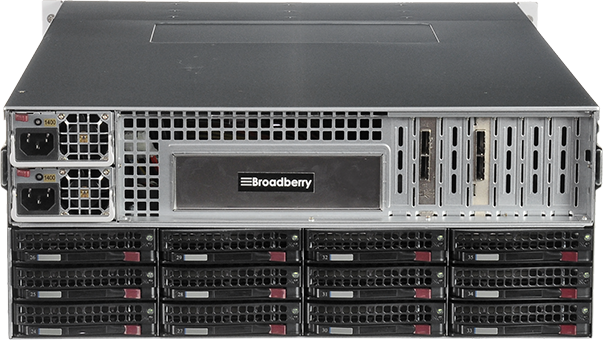

2U, 12 Bay JBOD (Direct Attached) Storage

4U, 24 Bay JBOD (Direct Attached) Storage

2U, 24 Bay JBOD (Direct Attached) Storage
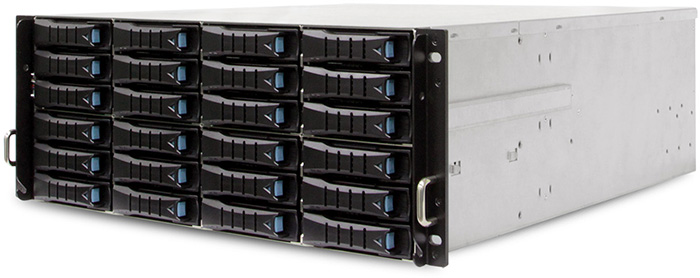
4U, 24 Bay JBOD (DAS) Direct Attached Storage - Dual Controller

4U, 60 Bay JBOD (Direct Attached) Storage

4U, 78 Bay JBOD (Direct Attached) Storage
The Next Generation Hybrid Platform for Software-Defined Storage

4U, 108 Bay JBOD (Direct Attached) Storage
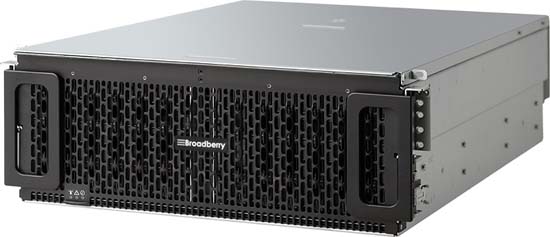
4U, 60 Bay JBOD (DAS) Direct Attached Storage - Dual Controller 12GB/SAS
| DAS = The Connection |
| Connects storage directly to a server or workstation without a separate storage network. |
| Defines how storage connects |
| JBOD = The Enclosure |
| A drive enclosure that can expose individual disks to the host or operate behind a hardware RAID controller. |
| Defines where the drives reside |
| HBA Pass-Through |
| Gives the operating system or storage software direct visibility and control of individual drives. |
| Best for: Host-managed storage |
| Hardware RAID |
| Uses Broadcom MegaRAID for controller-managed RAID, protected write cache and virtual disks. |
| Best for: Controller-managed protection |
Broadberry evaluates your workload, host environment, capacity and resilience requirements before recommending a DAS or JBOD architecture.
The right platform depends on capacity, workload, rack space, host connectivity and resilience requirements.
| If you need | Recommended Platform | Design Highlight |
| Compact storage expansion | CyberStore 212A-JBOD | 12 bays, 2U, up to 240TB |
| Redundant storage paths | CyberStore-SAS424 | Dual I/O, 24 bays, mixed media |
| High-density local capacity | CyberStore 460A-JBOD | 60 bays, up to 1.2PB |
| Maximum rack-scale density | CyberStore 4U102 | 102 drives, up to 2PB |
A 12Gb/s SAS connection alone does not determine storage performance or availability. Broadberry designs the complete path from the host to the drives.

Sized around capacity, performance and application requirements.

Size ports, expanders and cabling around workload.

Account for protection, spares and operational reserve.

Plan hot-swap access, monitoring, and maintenance.
Direct-attached storage is well suited to workloads that benefit from high-capacity storage located close to the server or application.
| Workload | Why DAS / JBOD |
| Backup & Recovery | Large local repositories with predictable backup and restore paths |
| Media Ingest & Post | Sustained throughput without another storage-network hop |
| Scientific Instruments | High-capacity local landing space for instrument and sensor data |
| Surveillance | Dense recording capacity for known camera and retention requirements |
| Software-Defined Storage | Direct drive access for host-managed storage stacks |
| Analytics & AI Data | Keep large datasets close to compute resources |
The workload and media requirements determine which direct-attached architecture makes sense.
SAS JBOD is well suited to high drive density, HDD economics, mature multipath support and straightforward external storage expansion.
For workloads requiring direct access to NVMe SSDs, Broadberry JBOF systems provide low-latency flash storage for ingest, analytics, HPC and other performance-intensive workloads.
Broadberry designs, integrates and validates the complete direct-attached storage path, helping ensure the server, enclosure, drives, controller and cabling work together as one solution.

Designed around application and performance requirements.

Vendor-neutral enterprise components from leading technology partners.

All-flash and hybrid architectures tailored to your workload.

Support from system design through deployment and future expansion.
What is direct-attached storage?
Direct-attached storage, or DAS, connects storage directly to a server or workstation rather than through a separate storage network. The host accesses the attached disks or logical volumes as local storage resources.
What is the difference between DAS and JBOD?
DAS describes the connection between the storage and host, while JBOD describes the drive enclosure. A JBOD can expose individual drives to the host or operate behind a hardware RAID controller.
When should I use DAS instead of NAS or SAN?
DAS is well suited to workloads that need high-capacity storage attached to a specific server without requiring shared network access. Common examples include backup, media ingest, surveillance, scientific data capture and local analytics.
Should I choose HBA pass-through or hardware RAID?
HBA pass-through is appropriate when the operating system or storage software needs direct control of individual drives. Hardware RAID is better suited to applications that require controller-managed protection, write cache and virtual disks.
What is the difference between single-path and dual-path DAS?
Single-path DAS uses one connection path between the host and enclosure. Dual-path configurations provide alternate enclosure paths for greater resilience, but end-to-end failover also requires compatible host adapters, drives, cabling and multipath-aware software.
How much usable capacity will I have?
Usable capacity depends on the selected drives, RAID or software protection scheme, hot spares, formatting and operational reserve. Broadberry calculates usable rather than raw capacity when sizing a solution.
Can I expand DAS / JBOD storage later?
Yes. Additional shelves can be added in supported configurations, but host connectivity, SAS bandwidth, power, cooling and rack requirements should be considered before expansion.
When should I consider JBOF instead of JBOD?
Choose SAS JBOD when capacity, HDD economics and straightforward external attachment are priorities. For workloads requiring direct access to high-performance NVMe SSDs, a JBOF may be more appropriate.
Tell us about your host system, workload, usable capacity, performance and resilience requirements. Broadberry will recommend the right enclosure, drives, controller and connectivity for your environment.

 Unser präzises Testing
 Alle Broadberry Server- und Storage-Lösungen durchlaufen vor dem Versand aus unserem Lagerhaus einen 48-stündigen Testlauf. In Kombination mit diesem Prüfverfahren sowie den hochqualitativen, branchenführenden Komponenten stellen wir sicher, dass all unsere Server- und Storage-Lösungen den strengsten Qualitätsrichtlinien entsprechen, die an uns gestellt werden.
 Unübertroffene Flexibilität
Unser Hauptziel ist es, hochwertige Server- und Speicherlösungen zu einem hervorragenden Preis-Leistungs-Verhältnis anzubieten. Wir wissen, dass jedes Unternehmen unterschiedliche Anforderungen hat, und sind daher in der Lage, unübertroffene Flexibilität bei der Gestaltung maßgeschneiderter Server- und Speicherlösungen anzubieten, um die Bedürfnisse unserer Kunden zu erfüllen.
Wir haben uns als einer der größten Storageanbieter im Vereinigten Königreich etabliert und beliefern seit 1989 die weltweit führenden Marken mit unseren Server- und Storagelösungen. Zu unseren Kunden zählen:


Broadberry Data Systems Allows Buyers to Test Drive New NVIDIA GPU-accelerated Servers
Broadberry Data Systems Allows Buyers to Test Drive New NVIDIA GPU-accelerated Servers
London, UK– Jan 26, 2021 – Broadberry Data Systems, one of the U.K.’s leading providers of customised s
impressum / returns / mein konto / Kontaktieren Sie uns / new accounts
CyberServe EPYC EP1-102A
A powerful AMD EPYC rack server for small spaces...
| August 26, 2026
CyberServe Ryzen RY1-104A
A core-heavy Ryzen rack server at an entry-level price ...
| April 01, 2024
CyberServe Xeon SP1-102G NVMe G5
A small, powerful, and affordable rack server.
Broadberry gets edgy with a great value rack server...
| December 01, 2023
Intel M50CYP2UR208 Coyote Pass Server - 8 Drive Bays. SAS/SATA/NVME
A mighty server package for the price with a big helping of blisteringly fast Intel Optane 200 PMEMs...
| August 02, 2021
 Rufen Sie bitte unseren Verkauf an